
What happens after a padel smash hits the glass?
A development note on the three surfaces that decide the next shot in our match engine: turf, back glass and metal mesh.
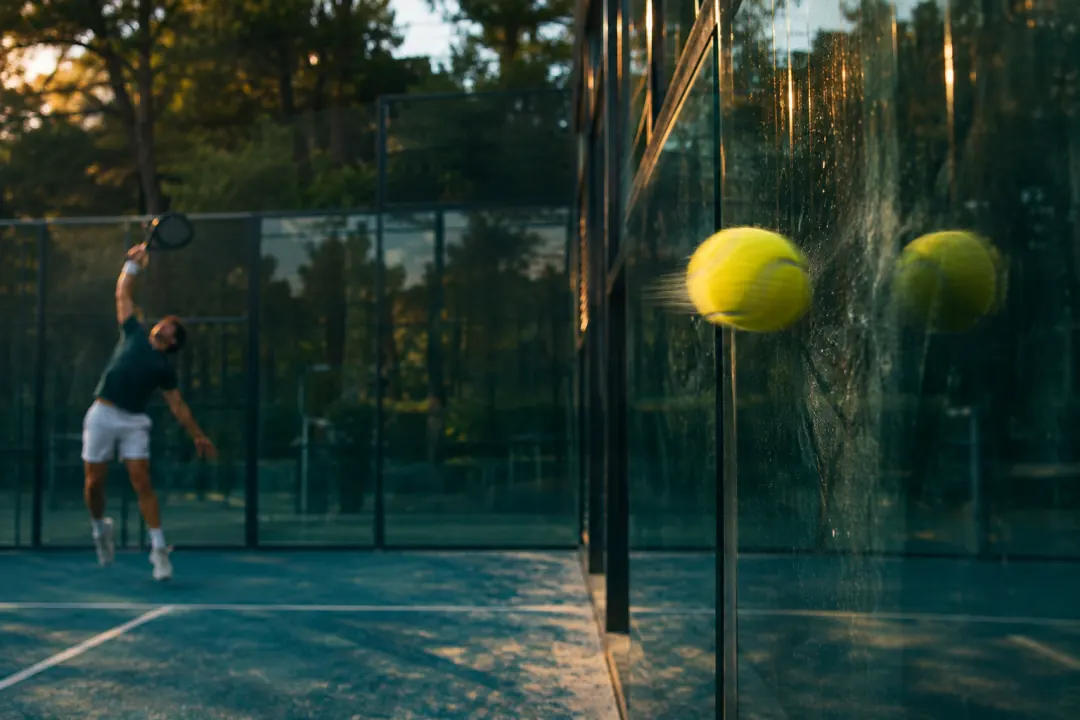
Follow the ball through the bounce
A smash aimed at the back of the court can give the hitter a winner or give the receivers an easy ball. In our simulation the difference starts before the ball reaches the wall. Watch the first bounce on the floor, then watch where the ball reaches the glass.
The floor takes speed out of the shot
We calibrate the simulated floor with a drop from 2.54 metres. The ball should rise to between 1.35 and 1.45 metres. That check gives us a reference for a gentle impact. Applying the same rebound to a smash made hard shots spring back across the net too readily, so the floor also absorbs a greater share of the impact at higher speeds.
Spin changes the exit angle. A topspin ball can kick forward after landing. A sliced ball can skid low. Two shots that land in the same place can leave a defender with quite different contact heights.
Glass and mesh give different second chances
The back glass preserves enough speed for a defender to wait for the rebound. A side fence takes more pace away and can change the angle. We vary that deflection with the point of impact and the incoming speed. Rewind a rally and the same ball comes off the same wire the same way.
For a coach, the interesting moment is often one shot earlier. Follow a winning smash back to the lob that set it up. Did the lob push the attacker behind the service line, or leave them balanced near the net? It was the depth of that lob that gave the attacker time to choose a finish.