
How coaching works when you rewind a match
Inside the development replay: how we keep the score, player confidence and a coach’s next decision on the same match clock.
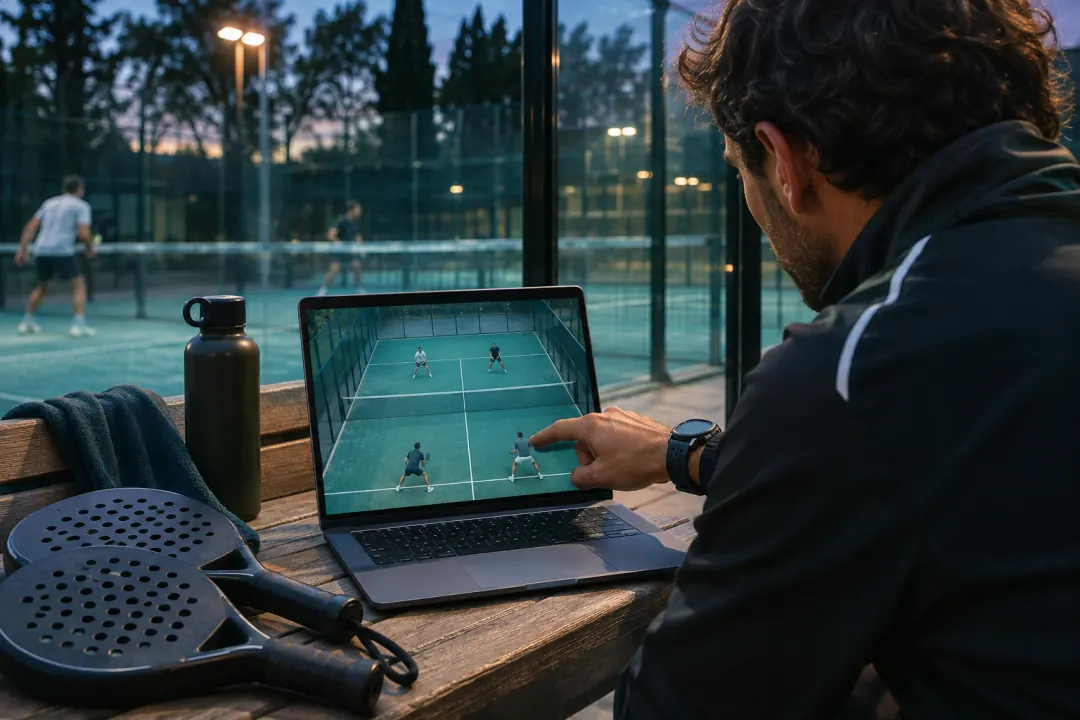
Rewind to the turning point
Imagine your pair has just been broken. You rewind to 30–30 to see why your right-side player tried a drive under pressure. The replay needs to show you the score and confidence from that moment. Using the current score would give away the ending to anyone watching the rally back.
One clock for every point
Each recorded point has a server, a start time, a call and a score before and after. Between points the ball disappears. Drag the playhead back over the call and the scoreboard goes back with it. The impact on the glass belongs to that same instant, so slowing down the rally keeps the rebound and its visual effect together.
What changes when you make a call
Suppose you watch another point, then scrub back to the break and decide your pair should use more lobs. In the development build the change takes effect after the furthest point you have watched. The old rally still shows the drive that prompted your decision. The new instruction gives the pair a different option on the next point they play.
That's also why the engine prepares only a few points ahead while you watch. A coaching decision can affect a match that is still unfolding. When the same problem keeps coming back, check whether the two players’ strengths complement each other.